
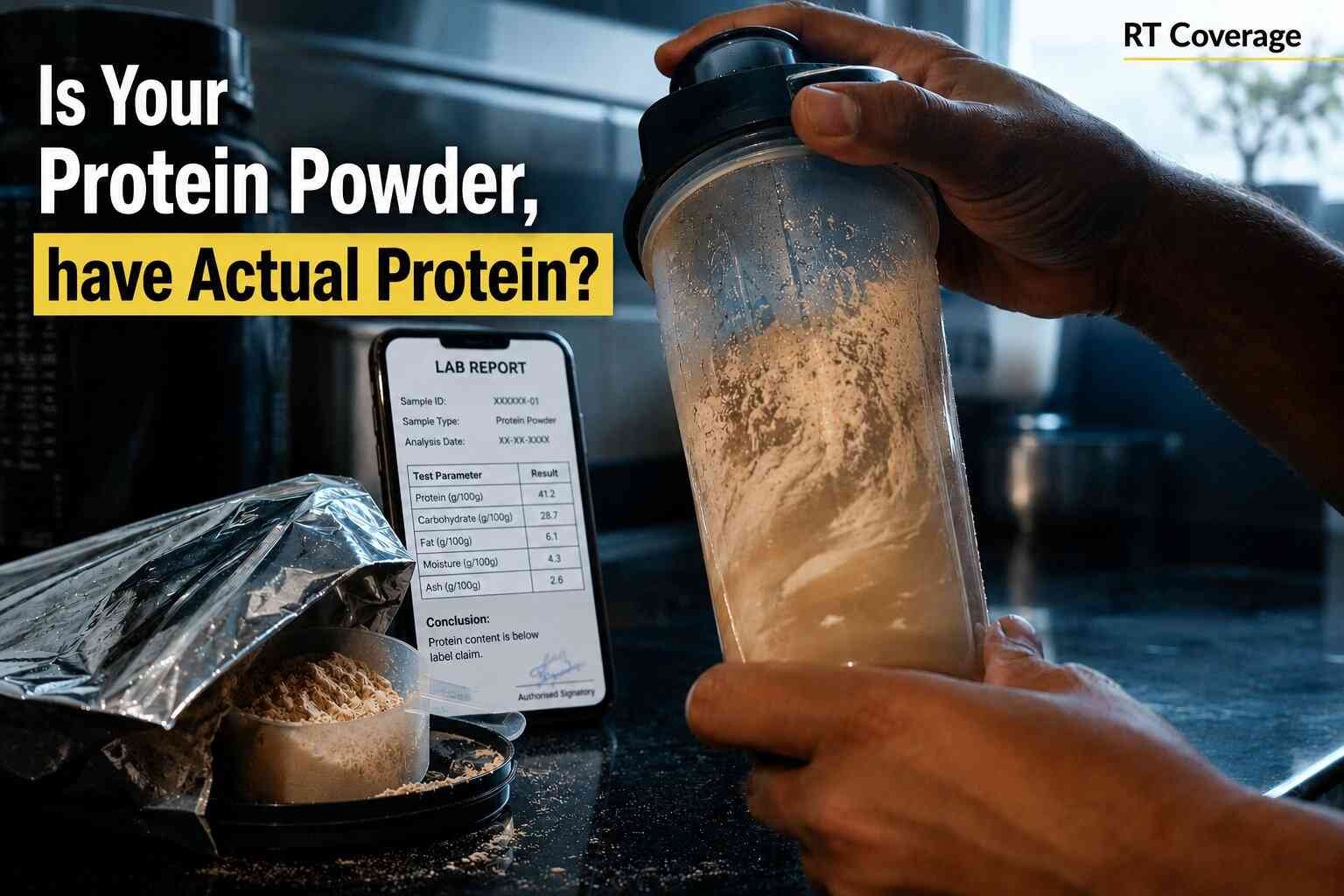
Is Your Protein Powder, have Actual Protein?
This RT core analysis reports is stand on one question and that is — “Is Your Protein Powder Actually Protein? as per What India’s Lab Tests Found.“
RT verdict: don’t trust the tin without checking
Brands mislabelled on protein content
70%
Citizen’s Protein Project, 36 brands tested
Is your brand safe? — check before your next scoop
Contained toxins (heavy metals, aflatoxins)
14%
Same 36-brand lab analysis
Signal value: high — real lab data inside
Products independently lab-rated in 2026
46
Unbox Health, NABL-accredited labs, Aug 2026
The Fitness Industry’s Open Secret Nobody’s Naming
Your protein powder, the one you scoop into your shaker every morning — does it actually contain as much protein as the label on tin claims? Odds are it doesn’t.
Not “might not.” Doesn’t.
India’s ₹3,000+ crore protein supplement market — growing 14-17% a year as gym culture spreads from metros into every Tier-2 city — is running on a level of trust the lab data simply does not support. And almost nobody selling you that shaker is telling you that.
Bcz the results you must get early were delaying.
The Lab Numbers, Brand by Brand
An independent, peer-reviewed analysis tested 36 of India’s most popular protein powders — self-funded, no brand sponsorship — and published the results in the journal Medicine.
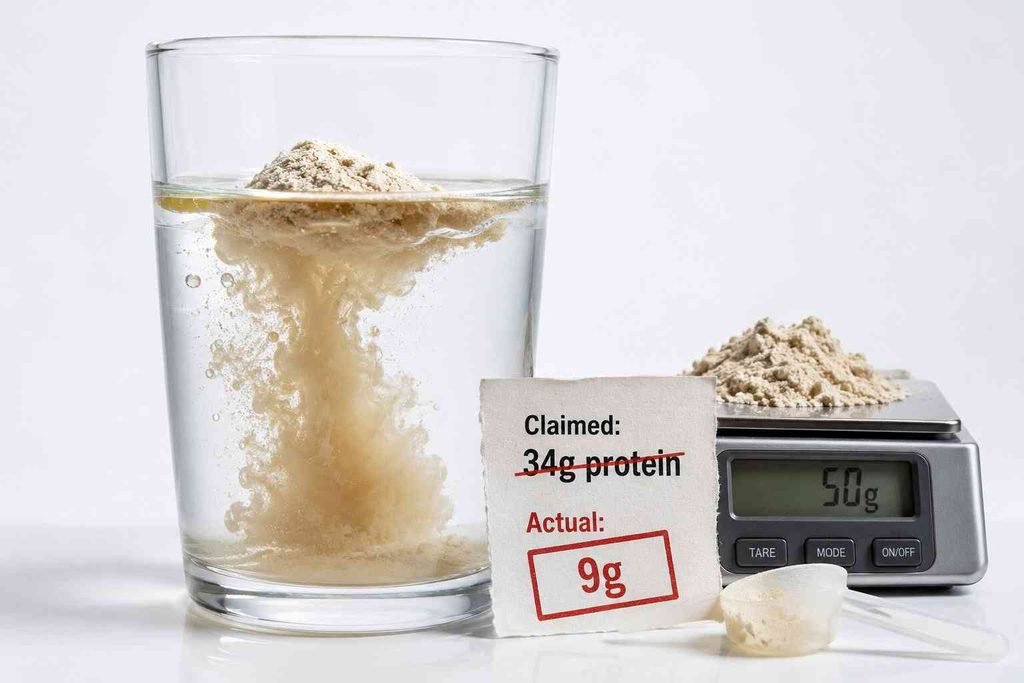
The findings: 69.4% of the brands were mislabelled on protein content, some delivering less than half of what the label on tin promised.
13.9% were contaminated with toxins including heavy metals and fungal aflatoxins. 8.3% carried pesticide residue. This wasn’t a random internet claim — it named names. BigMuscles came out the “worst brand” overall.
Amway’s plant-based protein was flagged “worst plant-based.” Protinex, Ensure, and B-Protin were called out specifically as “worst brands advertised as the best” — meaning the marketing spend and the lab result were pointing in opposite directions. On the other side, One Science Nutrition tested as the strongest whey, Nutrabox the best mid-range option, and Origin the cleanest vegan pick.
And this isn’t old news you can dismiss as fixed by now.
As of this month, an independent testing platform, Unbox Health, has lab-tested and rated 46 protein products through NABL-accredited labs, grading them D to A+ with every report published openly. The fog isn’t from 2024. It’s live, right now, in your gym bag.
Enforcement. Aimed at the Wrong Scale.
Here’s the part that should actually bother you. In 2022-23 alone, FSSAI recorded 38,053 civil cases and 4,817 criminal cases against food products that failed to conform to safety standards — real numbers, given to Parliament, not a guess. That’s a regulator that is clearly active.
But set that against the sample size of the actual protein powder study: just 36 brands independently tested, out of what is realistically hundreds sold across Indian e-commerce and gym counters. Enforcement exists at industrial scale. Independent testing of the specific product category millions of Indians consume daily exists at a scale you could count on your fingers. The gap between those two numbers is exactly where a bad brand keeps selling.
Who Actually Gets Hurt by This
- Daily gym-goer trusts the label to hit a protein target — if the tin label is 40% short, months of “consistent” training get quietly undercut by a shaker that was never doing its job.
- Budget buyer picking the cheapest tub on a quick-commerce app has the least room to absorb a bad batch, and the least access to lab reports before buying.
- Vegetarian or vegan buyer relying on plant protein has fewer verified options to begin with — which is exactly the segment where a flagged brand like Amway’s plant protein does the most damage.
- Parent buying for a teenager training for sport is trusting a label with zero verification, on a product going into a still-developing body.
Paying More for a Tested Brand vs. Trusting the Cheapest Tin
–
| Entity | Pros | Cons |
|---|---|---|
| Certified/lab-tested brand (Informed Sport, NSF, or independently verified) | Batch-level accountability, label usually matches contents | Costs more, fewer options in every price bracket |
| Cheapest available tin, no certification | Saves money upfront | Real chance you’re paying full price for partial protein — or worse |
This Was Never Just About Protein
Zoom out and this stops looking like a protein-powder problem and starts looking like a labelling-enforcement problem that happens to be worst in supplements. FSSAI registration is mandatory, but registration checks paperwork, not what’s actually in the pouch batch to batch.
Third-party certifications like Informed Sport or NSF Certified for Sport exist precisely because government registration alone doesn’t catch amino acid spiking — where a brand lists creatine, taurine, or glycine high on the ingredient list specifically to inflate the protein number on paper without adding real protein. Until batch-level testing is mandatory rather than voluntary, the honest brands and the inflated ones sit on the same shelf, priced the same, trusted the same.
RT Decision Frame
NO on trusting any protein tin purely because of its shelf position, ad spend, or how many gym influencers are holding it in a reel.
YES on checking three things before your next purchase: an FSSAI registration number on the label, a third-party certification logo (Informed Sport or NSF Certified for Sport) you can actually verify online, and — if you can find one — a recent independent lab report for that exact brand and batch.
Before you put poison with your money into your own mouth, ask for proof — not just the label on tin's promise. That's the whole rule. Not which brand is trendiest. Which one actually earned the label.
Research Sources:
- The Print / Medicine journal — Citizen’s Protein Project, 36-brand lab analysis
- Business Standard — protein powder toxin and mislabelling findings, FSSAI response
- Unbox Health — live 2026 lab-tested protein powder ratings
Share with a (Gym = Protein) Freak!




lzsjgpgxpenidezopqqxxuhqmrowgg