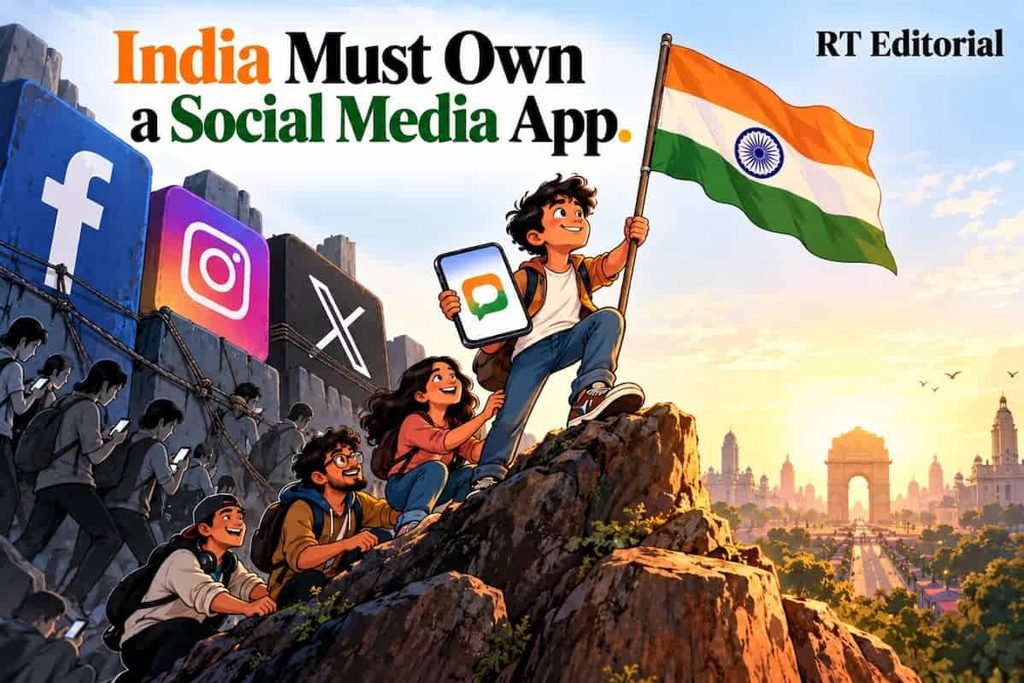
India Must Own a Social Media App
RT verdict: build the rails, not just an app
WhatsApp monthly users in India
500M+
The network effect to beat
Is dependence a real risk? — Yes, documented
Arattai monthly users after its surge
~4M
Zoho’s CEO, January 2026
Will patriotism alone fix it? — No
Koo’s peak monthly users
~10M
Shut down July 2024
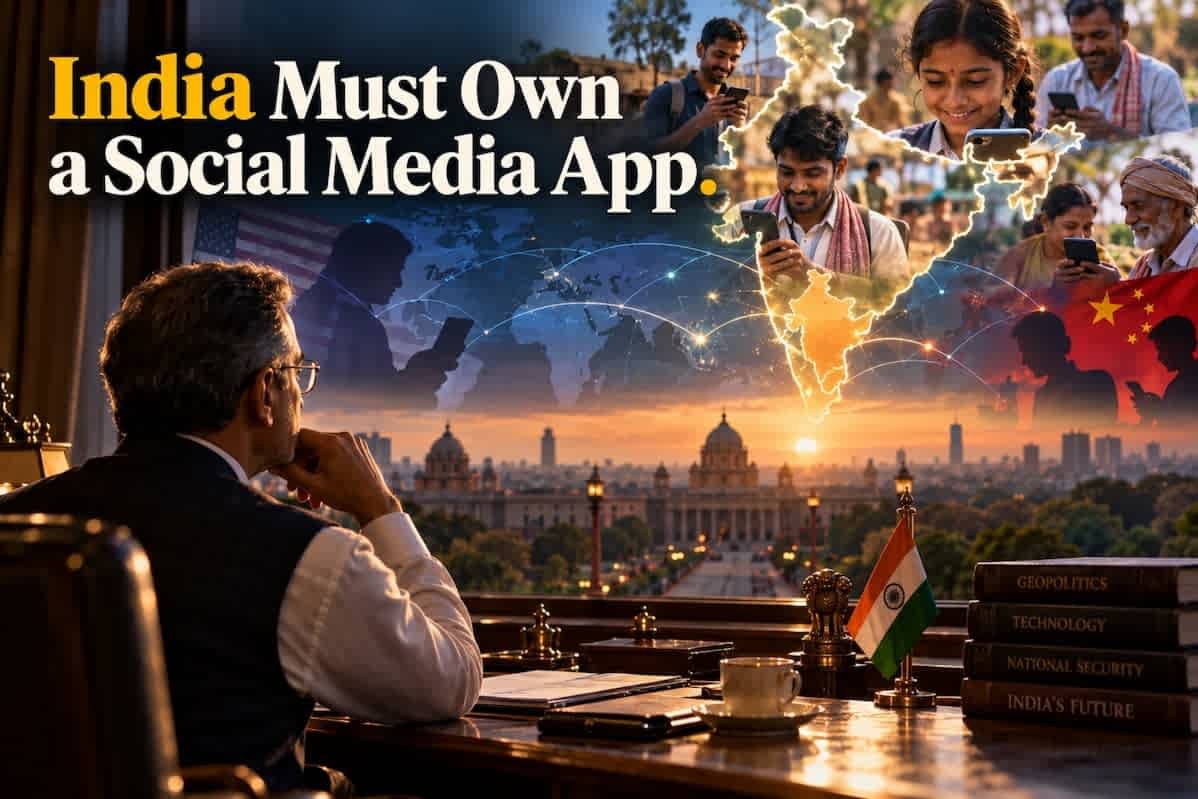
India Must Own a Social Media App — and Patriotism Alone Won’t Build It
.
An open letter to every Indian with a smartphone
– by Foreign Diplomat, India
.
Open your phone. Look at the apps you use to speak to your family, your colleagues and your customers. How many does India own?
The honest answer is almost none. WhatsApp alone has over 500 million monthly users in India. One foreign company’s servers and rules now carry our family groups, our small businesses and a growing share of our public services. That is a convenience. It is also a dependency.
Why This Is a Security Question, Not a Pride Question
No one has switched off WhatsApp for India, and nothing I found suggests anyone intends to. But precedents exist, and a prudent state reads them.
In July 2025, Microsoft suspended services to Indian refiner Nayara Energy after EU sanctions. Nayara said no Indian or US law required it. Services returned only after Nayara went to the Delhi High Court. That was one company. It still showed how fast a foreign firm can cut off a lawful Indian business.
Russia shows the other side. In February 2026, Moscow blocked WhatsApp. It then throttled Telegram and pushed a state-backed messenger called Max.
India knows this lever well. In June 2020, we blocked 59 Chinese apps, TikTok among them. A country that can pull the plug on others should assume the plug can, in principle, be pulled on it. Consider a war, a sanctions dispute or a trade standoff. Communication is the first thing a government needs and the last thing it can improvise.
Why Our Apps Failed
India has tried. Koo and Arattai are the best-known efforts. Their stories teach four lessons.
- The network effect beats nationalism. People join where their contacts are. After a viral surge in late 2025, Arattai’s downloads jumped ten to twenty times. Its monthly active users later slipped to nearly four million, per Zoho’s own CEO. WhatsApp has more than a hundred times that.
- Pride is not retention. Koo had union ministries and over 9,000 VIP accounts. It peaked near ten million monthly users. It shut in July 2024.
- Social media burns cash before it earns any. Koo raised over $60 million. Its founders blamed a “funding winter” and high technology costs. They said scale must come before revenue. Meta can wait a decade. A start-up cannot.
- “Indian” is not a feature. A copy of an existing app, wrapped in a tricolour, gives no one a reason to move their family group.
What a Serious Strategy Looks Like
- Build rails, not just an app. UPI is India’s best digital success because it is a public rail that many apps share. Messaging needs the same logic. Interoperability would let a new entrant reach WhatsApp users without winning a war of contacts first. The EU already requires large messengers to open up to rivals.
- Fund patience. A national platform fund with a ten-year horizon would have given Koo room to survive. Short-term venture timelines cannot build infrastructure.
- Start where the state already is. Government schemes, UPI and DigiLocker already reach hundreds of millions. Zoho has said it plans WeChat-style payments and services inside Arattai. Utility gives people a reason to stay.
- Earn trust before asking for loyalty. Make end-to-end encryption standard. Publish independent audits. Write limits on state access into law. Max is the warning. Reports say it lacks end-to-end encryption, and it is state-backed.
- Own the stack. Max had tens of millions of registered users. In June 2026, Apple removed it from the App Store, reportedly to comply with sanctions. That cut off over 20 million iPhone users, by the Russian minister’s estimate. An app is only as sovereign as the store, cloud and phone it runs on.
A Word of Caution
Owning an app does not guarantee freedom. A state-controlled platform can become a surveillance tool, as critics say of Max. Many democracies without home-grown giants manage the risk through regulation and local data rules. The case for India is not isolation. It is resilience, choice and a credible fallback. An Indian platform need not leave India’s borders to be worth building. Global ambition should follow domestic trust.
What You Can Do
Install an Indian app and move one real group onto it, such as your family or your shop’s customers. Judge it on quality, not slogans. Demand encryption and transparency from every platform, foreign or Indian. Support the builders who stay when the hype fades.
RT Verdict
YES to a sovereign messaging and social layer. NO to the idea that one patriotic app, launched with a campaign, will deliver it. Build the rails, fund the patience and earn the trust.
Hum duniya ke sabse bade digital bazaar mein rehte hain — ab apna ghar bhi banana hoga. (We live in the world’s biggest digital marketplace. Now we must build our own house in it.)
Sovereignty is not declared in a speech. It is built, one reliable message at a time.
Respectfully,
.
RT Editorial: Special Thanks to My dearest Friend/Guest of this article, whom name we can’t Publish.
.
Lets INDIA have
its OWN Social Media.