

What My Grandfather Wrote in Last 5 mins
One eve
at 6am a loud, sharp shout came to my ears from my grandfather’s room. I woke up shocked and rushed towards his room, and the door was locked inside, but my body trembled in fear. What’s happening inside?
Anyhow, he opened the door with his stick, and I entered. “Grandpa was on the floor and sweating,” I said. “Please tell me what’s happening, please, Grandpa. You are the only one with me…”
But he silenced me and said…
Beta, sit with me for a while. and listen very carefully and write or record it down for me. It’s my last wish for you.
, before I say, ‘Please, please let’s go to the doctor, or you take rest.’ I came with help, and he started with…
I have nothing left in my time; you and I will regret it more if I don’t tell you this NOW.
Not because I have long left, but because there are things I only understood after paying for them — and I would rather you have them for free.
Here is the shortest version of everything I have learned: a fool pays full price for his own lessons. A slightly wiser man watches someone else pay it, and walks away with the lesson without the bill. And the wisest one I ever met didn’t even wait for someone to fail — he watched them succeed, and simply asked why.
I
was the first kind for most of my life. Want to be honest about that, because a grandfather who only tells you his victories has told you nothing useful.
I have made mistakes that cost me money I could not easily replace. I have made decisions in business that I still think about at odd hours — not with shame anymore, just the quiet ache of knowing exactly where I could have stopped and didn’t. Losses like that don’t only take your money. They take a version of time nobody refunds.
As wise man said
“Learning from mistakes, is better than bearing loss”
But somewhere in the wreckage of enough mistakes, I found the one habit that changed everything after it: I started watching other people lose, before I lost the same way myself. Not from a distance, out of pity. Closely, deliberately, like a student who knows the exam is coming.
Many times
I asked the shopkeeper down the road why his shop finally closed. And also asked the man who expanded too fast what he wished he’d done differently. I read about strangers’ failures the way other men read the stock pages — looking for the pattern hiding underneath the story.
Yeh mehnga sabak sasta mil raha tha, bas dhyaan se sunna padta tha. (This expensive lesson was available cheap — you just had to listen carefully.)
That effort — the extra hour spent understanding someone else’s collapse — has saved me more money than any single decision I made on my own cleverness.
Every rupee I didn’t lose because I recognized a mistake before I made it myself, that is wisdom I never paid for. It was handed to me by someone else’s pain. All I did was pay attention.
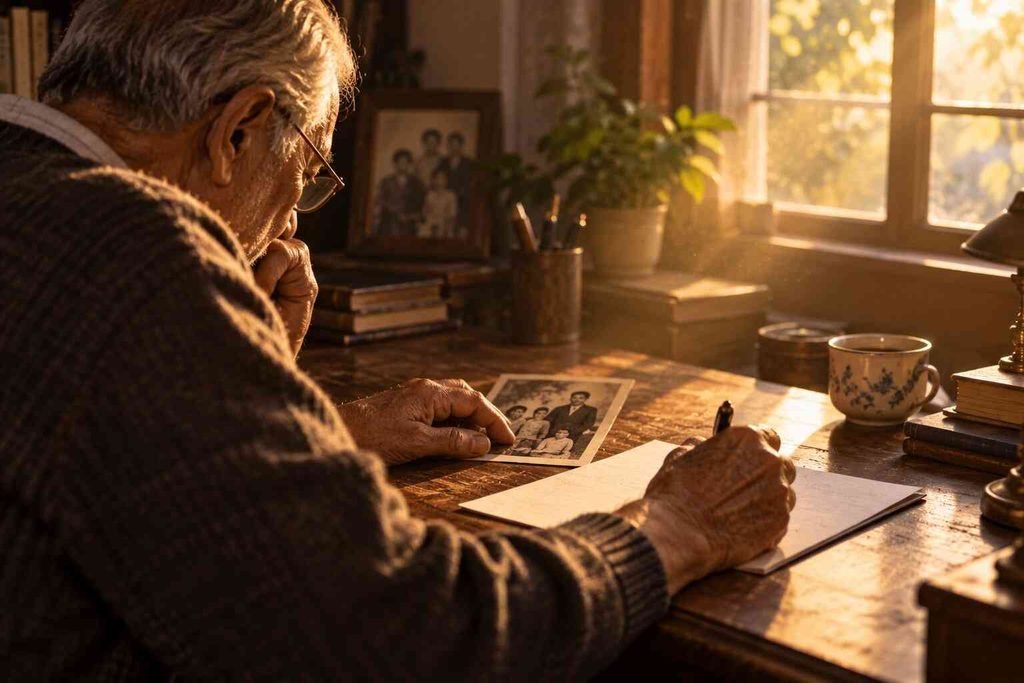
Here is the part I am less proud of, and the part I most want you to hear clearly: knowing all this has not made me immune. I still make mistakes.
Sometimes
the very ones I could recite to you as a warning, word for word, the way you’d recite a rule you’ve broken before. There is a strange, humbling comedy in teaching a lesson you are, in that same season, failing to fully live by yourself.
I used to be embarrassed by that. I am not anymore.
“Don’t Pay Full Price for a Lesson Someone Else Already Bought.”
Because the correction — the going back, the admitting, the rebuilding of what I broke — has never once felt like defeat to me. It feels like proof I am still in the game. A man who no longer makes any mistakes has usually stopped trying anything that matters. I would rather keep failing in small, honest ways at seventy than have quit playing at forty.
So
here is what I am leaving you — more than the money, more than the business, more than the house: treat other people’s losses like tuition you already paid for in a former life.
Save your own losses only for the mistakes nobody could have warned you about — those are the only ones truly worth affording.
And when you fail anyway, because you will, don’t perform shame for it. Correct it, learn it twice as well as if it had cost you nothing, and keep walking.
That is the whole inheritance. The rest is just details.
Sources:
This is a personal essay, not a researched piece — no external sources used.
The framing was inspired by two widely known ideas on learning from others’ experience
(commonly attributed to Otto von Bismarck and leadership writer John C. Maxwell), paraphrased into original wording rather than quoted.
Share with someone before they Mistake!




ROrfHCjricxKjdzQnv