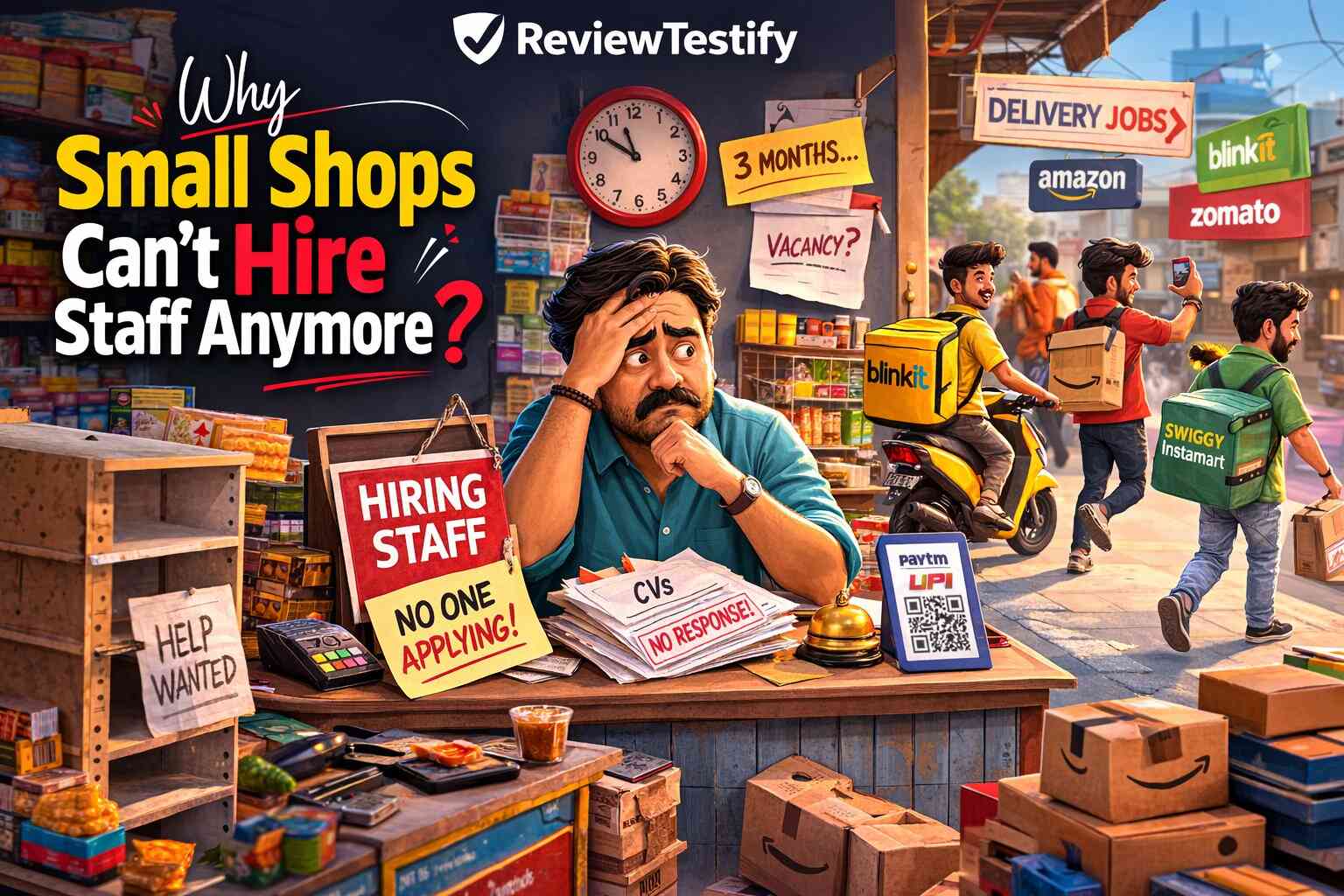
“Why can’t I hire staff for my small shop?”
This article explains why small shopkeepers are struggling to hire staff for their retail shops.
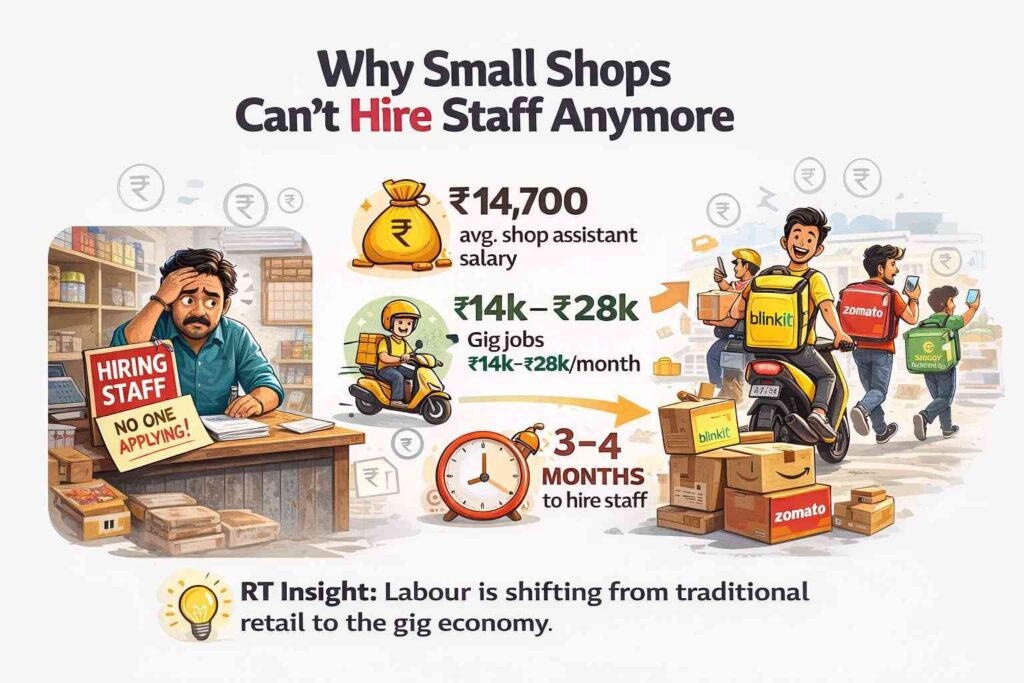
Nowadays, a major challenge for small shopkeepers is hiring staff. Even when we anticipate that current staff will leave, it often takes 3-4 months to find replacements, leaving us short-handed. By then, the departing staff may demand a salary hike, which isn’t feasible in this tough market.
आज के टाइम छोटे दुकानदार की सबसे बड़ी समस्या है स्टाफ कैसे रखें। पहले से रखे हुए स्टाफ जब काम छोड़ने वाले होते हैं, यह जानते हुए भी जब हम पहले से एक्शन लेते हैं नया स्टाफ हायर करने का, तब भी 3-4 महीने निकल जाते हैं पर स्टाफ हायर नहीं होता और अब तक पुराने स्टाफ के जाने का टाइम हो जाता है, फिर अगर उसे रोको तो वो सैलरी बढ़ाने को बोलता है जो कि इस गिरी हुई मार्केट में हमारे लिए संभव नहीं होता।
No! You’re not unlucky — the market had changed, and hiring didn’t. Customers now want speed, apps pay better, and young workers treat low-skill jobs like short gigs. So when your counter-boy hands in his resignation, replacing them isn’t a two-week problem anymore. It’s a long system problem now. Here’s the real diagnosis — and what actually works.
The Major 6 issues
Unjust Salary Range
You can’t compete with market reality by hoping it will change. After the internet boom and the rapid rise of quick-commerce, wages for entry-level roles have risen — ₹8–12k no longer cuts it. The average shop assistant today earns roughly ₹14,700/month (Indeed benchmarks). If your pay lags, good candidates won’t even come for an interview. This isn’t charity — it’s market alignment. Pay the baseline or redesign the job so you don’t pretend a single wage fits every responsibility.
Overexpectation of job benefits
Today’s frontline roles offer more than a monthly slip: daily incentives, attendance bonuses, instant payouts, predictable shifts and basic perks from day one. Candidates with minimal education now compare your offer to what apps and branded showrooms provide. If you can’t match the benefits, at least make the job clearer, fairer and less painful to do.
Fewer candidate
It sounds odd in a 1.4 billion nation, but talent for simple shop roles is scarce in urban neighbourhoods. Most young workers prefer gigs that pay immediately or brand roles that promise clarity and future growth. If your store looks like a grind, you only attract people who have no better options. That’s not a market failure — it’s a signalling problem.
Sloth Growth
Sloths move slowly for a reason — and so do businesses that refuse to modernise. If you still run manual billing, chaotic shelves, and ad-hoc reorders while competition delivers in 10 minutes, your operation is literally built to lose. Slow processes mean higher cost per sale and no room for better wages. Speed up the basics or accept shrinking margins.
Uneasy Job
A job that asks one person to greet, lift, pack, bill, clean and calm angry customers is hectic. Brand showrooms split these tasks; they make each role simple and trainable. If your work is inherently messy, you’re the one making it unattractive. Simplify tasks, clarify duties, and hire for single-focused roles — not for heroic generalists.
Practical & Tested Solutions
I’ve been in retail for over 15 years, and I can tell you that the solutions I’ve trusted still work for me today. Even with the internet boom and the pandemic, some tried-and-true methods never fade away.
Hire Females
Women frequently deliver steadier attendance and long-term retention in neighbourhood shops when treated respectfully and given safe, predictable shifts. They often seek supplementary household income and value consistent schedules. Ensure safe transport, clear shift timings, and dignity at work — retention will follow.
Grow or die
Growth funds’ survival. Add services that increase revenue per customer: local delivery, repeat-order bundles, simple e-commerce for your area, or subscription basics. Even small increases in turnover let you pay better and keep staff. If you can’t commit to growth, deliberately reduce your footprint so your family can manage it; passive hope won’t pay wages.
Limited staff
Design the business so it runs within a manageable headcount. Use modern shelves, clear signage, and a simple POS to let customers self-serve where possible. Hire staff only for essential maintenance and customer touchpoints. Smaller, well-defined roles are cheaper and easier to fill than one overloaded position.
Super Pricing
You can’t out-spend platforms, but you can be honest and strategic. Fix transparent pricing, avoid random markdowns that train customers to wait, and offer small, unique services (neighbourhood credit, quick gift wrap) that build loyalty. Compete on convenience and trust when price competition is brutal.
Customer honey
Imagine being a honeybee, flitting from flower to flower, but unlike the bee, you can’t afford to be picky—ensure no customer leaves empty-handed.
Be relentless in your pursuit of satisfaction! Train your staff to suggest an extra item and make essentials easy to find. Remove any friction at checkout to ensure a smooth experience.
When customers feel valued and leave with what they need, they return and often spend more, creating a loyal following. Make every interaction sweet, just like honey!
Before ending… 👋+🔜
This isn’t about being stingy. It’s about alignment: job design, pay, and modern convenience must match candidate expectations.
The market moved — either you adapt and pay the cost of survival, or you shrink until it’s manageable.
Treat staff as investments, not stopgaps. That’s how small shops stop losing people and start getting reliable help.
Research & Evidence Sources
- Shop assistant average salary in India (~₹14,700/month)
- Rapid growth of quick-commerce is reshaping retail jobs
‘Adapt’ before the market changes you!