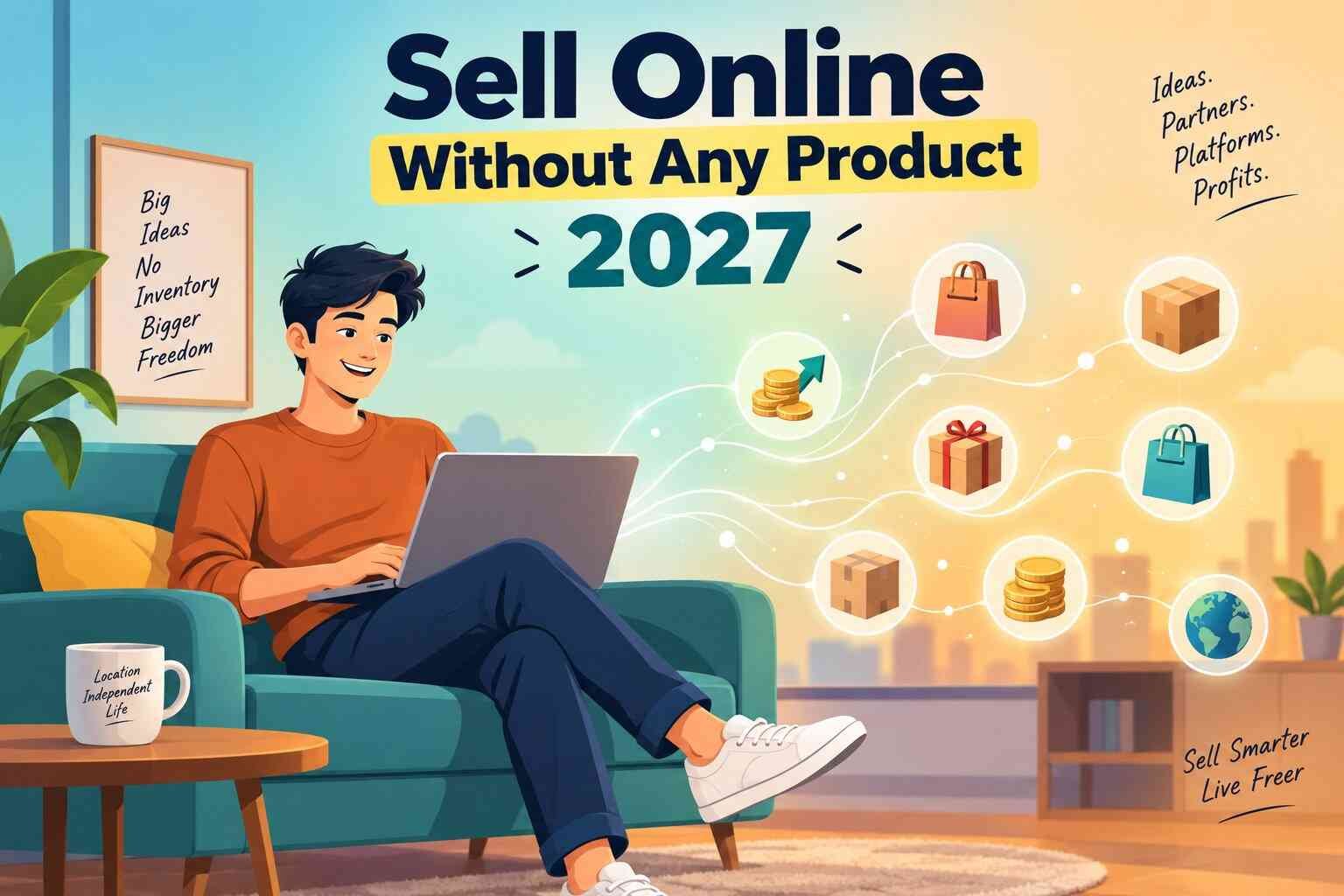
Sell Online Without Any Product 2027
You Can Sell Online Without Ever Touching a Product.
Here’s How Affiliate Marketing Actually Works.
RT VERDICT
Real, but slower than the gurus admit
ZERO INVENTORY?
— Yes. Zero effort? — No.
WHO IS BEST FIT:
Anyone already making content
Amazon India commission range
1-10 %
Fashion 5-9%, electronics as low as 1%
Amazon cookie window
24 hrs
The detail most guides skip entirely
Pat Flynn’s lifetime affiliate revenue
$3.5M+
Built over 16 years, not 16 months
Nobody Tells You This Option Exists
whenever someone talks about online business, everyone pictures the same thing — inventory, packaging, Amazon seller account, GST, returns, courier drama at 9 PM. And that’s exactly where most people stop, because that whole setup needs money you might not have.
But there’s a second door, and almost nobody points at it: you can earn from online selling without ever owning a single product, handling a single return, or paying for a single shipment. It’s called affiliate marketing. You recommend something, someone buys through your link, you get a cut. That’s the entire model.
I want to walk you through it the way — including the parts that don’t show up in the “earn ₹1 lakh a month” reels.
Do you remember the last time you bought something unique from Amazon after being inspired by a reel or a post? Sometimes you buy products that make kitchen tasks easier—like a chopper—and other times, it’s something trendy like a fidget spinner.
Data shows that influencers who promote products through affiliate marketing earn more than those who rely solely on brand sponsorships.
However, your affiliate efforts will only succeed if things are done right on both fronts: the product itself and the influencing strategy.
The Platforms Actually Worth Your Time in India
Amazon Associates is where nearly everyone starts, and for good reason — it’s free, it takes about 15-20 minutes to sign up, and Indian buyers already trust Amazon enough to complete the purchase. But know the numbers before you build anything: commissions run 1% to 10% depending on category. Fashion pays 5-9%. Electronics — the category everyone instinctively wants to review — pays as low as 1-2%. There’s also a catch most guides skip: the cookie lasts only 24 hours. If someone clicks your link today and buys the same item next week, you get nothing. And you need at least 3 qualified sales within 180 days to stay approved.
Flipkart Affiliate currently pays higher than Amazon in several categories — up to 7.5%, touching 9% on fashion. Worth running alongside Amazon rather than instead of it.
Cuelinks and EarnKaro are Indian aggregators that pull multiple programs into one dashboard, which matters more than it sounds — instead of tracking six different accounts and six pay-out thresholds, you get one place to see what’s actually converting.
How Influencers Actually Make Money at This
Here’s what separates the creators earning real money from everyone else: they don’t post links. They build a reason for you to trust a recommendation, and the link is just where that trust gets cashed in.
Amazon’s Creator Connections lets influencers promote specific products or brands at up to 3x standard commission — that’s not available to someone dropping random links; it’s available to someone with a real audience. And the category choice does more work than the follower count: a fashion creator linking a ₹3,000 kurta at 5-9% earns meaningfully more per sale than a tech reviewer pushing a ₹30,000 phone at 1%, despite the phone being ten times pricier.
Video also converts harder than text — product reviews, unboxings, and honest “best of” comparisons drive higher conversion than a written list, because people want to see the thing before they buy it.

The Millionaires — And What Their Numbers Actually Say
Pat Flynn is the most documented case in the business, because he publishes his income reports openly. Laid off as an architect in 2008, he turned a site he’d built for LEED exam study notes into Smart Passive Income. His first ebook earned $7,008 in one month. By December 2017, he reported over $105,000 in a single month from affiliate commissions alone — roughly 63% of his total income that period. Lifetime affiliate revenue: over $3.5 million.
Matt Diggity came from electrical engineering and Silicon Valley software sales, burned out at 60-hour weeks, and taught himself SEO in the evenings. His companies now do roughly $400,000 a month, with a net worth around $3 million.
Read both stories carefully and you’ll notice the same thing: neither made money from links. Flynn made money because he published his real numbers — wins and losses — until people believed him. Diggity made money because he got genuinely good at one skill, SEO, over years. The commission was the last step, never the first.
So Is This Actually Good for You?
Honest answer: it depends entirely on one thing — do you already make content, or are you willing to start?
This works well if you write, film, or post anything regularly. You’ve got the hard part already. Adding affiliate links to content people already trust is the single lowest-friction income addition in online business — no capital, no inventory, no GST headache to begin with, no returns.
This works badly if you’re looking for money without building an audience first. There’s no version of this where you skip the audience. The “passive income” framing is the biggest lie in the category — it becomes passive, years after it stops being passive.
Why 2027 Is Genuinely a Good Time to Start
Not because of hype — because of a structural shift. Buyers now research before every purchase, and they trust a specific person’s recommendation more than a brand’s ad. That’s the entire mechanism affiliate marketing runs on. Meanwhile the tools have gotten absurdly cheap: aggregator platforms handle tracking, payouts start at a ₹500 threshold, and a phone is enough to produce converting video.
But the window favours one specific kind of person — someone willing to be genuinely useful and genuinely honest about products, in a market drowning in people who’ll recommend anything for 4%.
RT Decision Frame
YES on starting affiliate marketing if you’re already creating content or willing to commit 6-12 months to building a small, trusting audience in one narrow niche.
NO on treating it as passive income you can switch on this month — the money follows the trust, and trust has a build time nobody can shortcut.
Link se paisa nahi banta, bharose se banta hai — link toh sirf wahan hai jahan bharosa cash hota hai.
Pick one niche you’d talk about for free. Start there.
Research Sources:
- Cuelinks — Amazon India vs Flipkart commission rates and Creator Connections
- WsCube Tech — Amazon Associates India cookie window, approval requirements, category rates
- The Mango Network — Pat Flynn’s documented $3.5M+ affiliate revenue income report
Share To Earn $$